Holy Trinity and St John's Church of England Primary School
Curriculum
Curriculum Intent
Our curriculum is broad and balanced. It is designed to build strong, interconnection in children’s long-term memory, enabling them to know more, remember more, and do more. The sequencing ensures clear progression in both substantive knowledge (facts and information) and disciplinary knowledge (skills and ways of thinking), aligned with the National Curriculum and EYFS frameworks. Our curriculum is organised to promote cross-curricular and thematic learning where appropriate and provide learning experiences specific to our pupils and their local area. We are committed to developing the ‘whole’ child and for them to develop a thirst for knowledge and foster a love of learning. We strive to deliver wide and varied learning experiences both within and beyond the classroom.
Curriculum Implementation
We strive to ensure every pupil, irrespective of their starting point achieve and attain well. The implementation of our curriculum is designed to meet the needs of our pupils and school community. There is flexibility within timetabling so subjects can be taught daily, weekly and in blocks. Our Christian vision, values, ethos and our school’s emotional environment are intrinsic to our approach. Pupil experiences are also an important part of our curriculum so knowledge can be deepened and learning links made.
Our curriculum will be implemented through: -
-
being ‘Ready, Respectful and Safe’
-
characteristics of effective learning
-
fundamentals of quality teaching, learning and behaviour
-
promoting and curiosity
-
exciting and interesting learning opportunities
-
outdoor learning
-
SEND provision maps and SEND pathways
-
language development
-
adaptive teaching
-
curriculum drivers
-
knowledge organisers
-
British Values
-
Blooms Taxonomy
By introducing Bloom’s Taxonomy to our planning and delivery, we aim to develop our pupils’ higher order cognitive skills leading to strong, banked knowledge that our pupils can retrieve beyond our teaching.
Within our classrooms, our pupils are familiar with the vocabulary related to Bloom’s Taxonomy and they use this to articulate how they are learning. Our pupils understand that the cognitive skills that they are using, cross over many subjects and are not stand alone subject specific skills. This develops and strengthens our pupils’ synapses, thus promoting knowledge that is banked in to their long-term memory and will support them in their life-long learning journey.
Curriculum Impact
The leadership team, subject leaders, teachers and support staff all play different roles in ensuring our curriculum has maximum impact for every pupil. Leaders evaluate and monitor overall impact which is essential for our curriculum’s continued development.
Medium Term Plans are reviewed and adapted so learning is rich and engaging and teaching leads to high standards. Monitoring of impact is carried out in a variety of ways, including watching and feedback, learning walks and gathering pupil voice. Planning and book scrutiny also assist leaders in targeting training, supporting colleagues and identifying next steps for improvement.
Success is measured through summative assessment and the tracking of individual pupils and pupil groups within each subject area. It is also measured through the children’s preparedness for the next phase of learning and for life. Teacher assessment is moderated within year groups, key stages and across the whole school as well as alongside other schools. External moderation also forms part of this process.
Progression of Skills and Knowledge
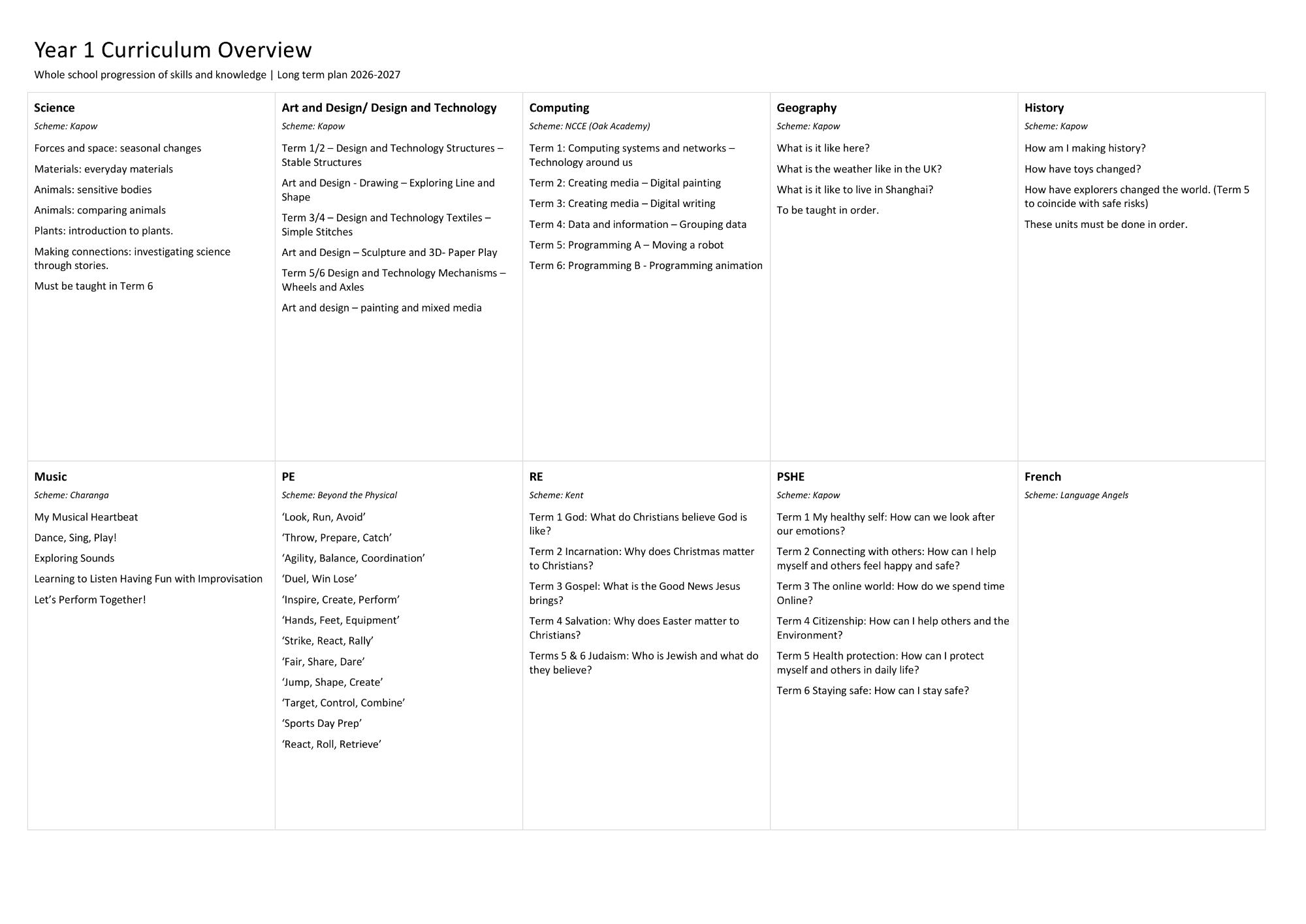
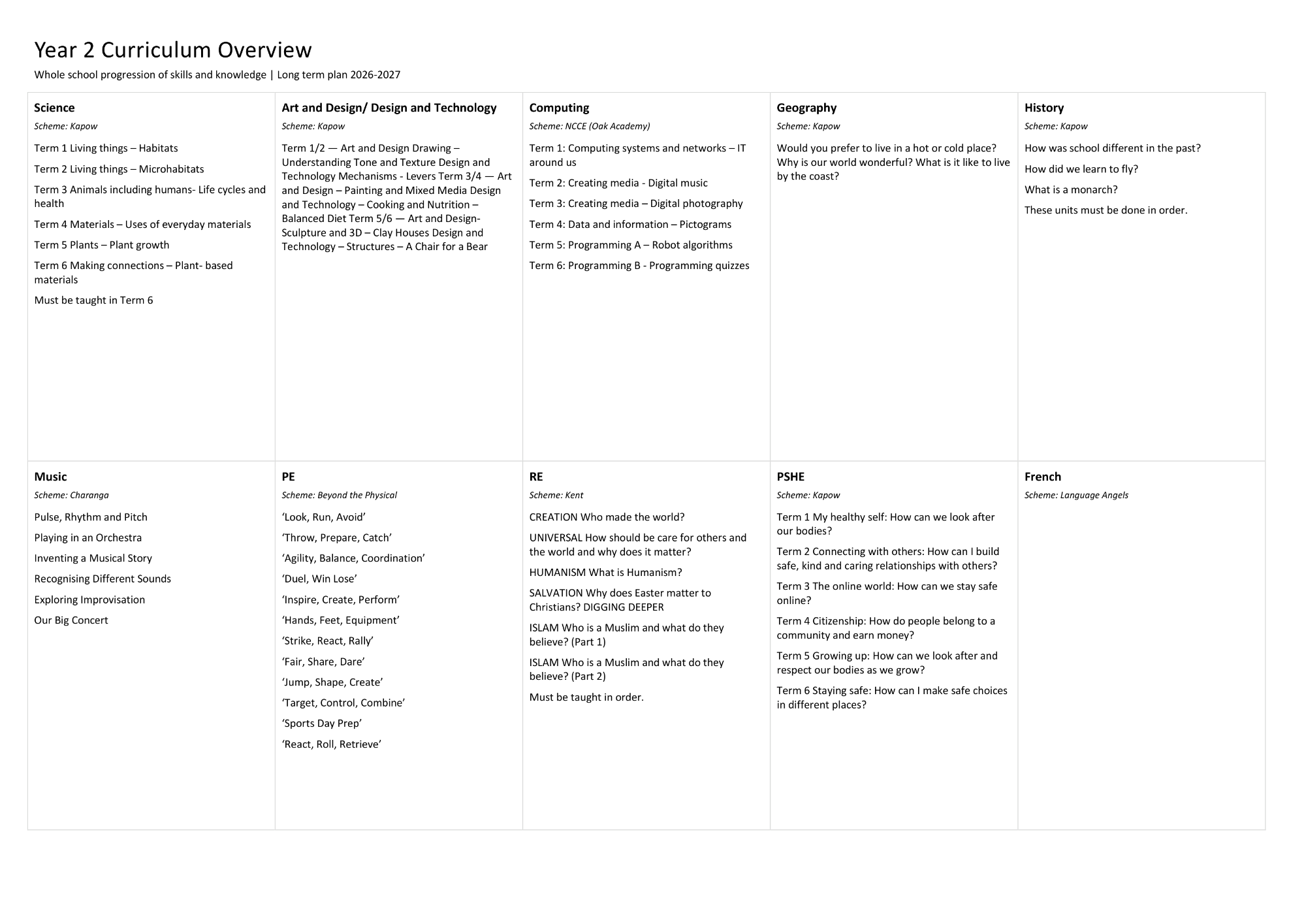
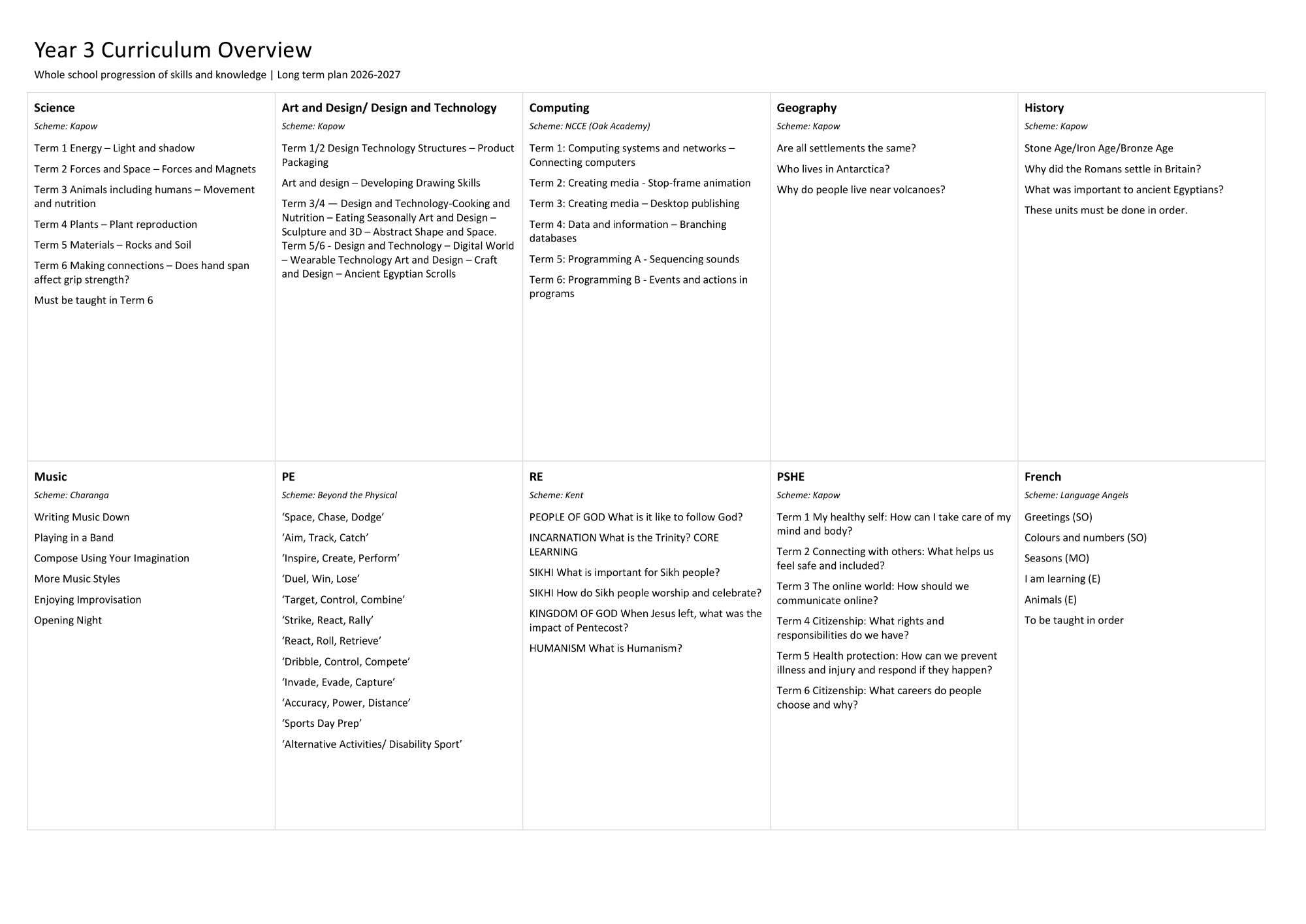
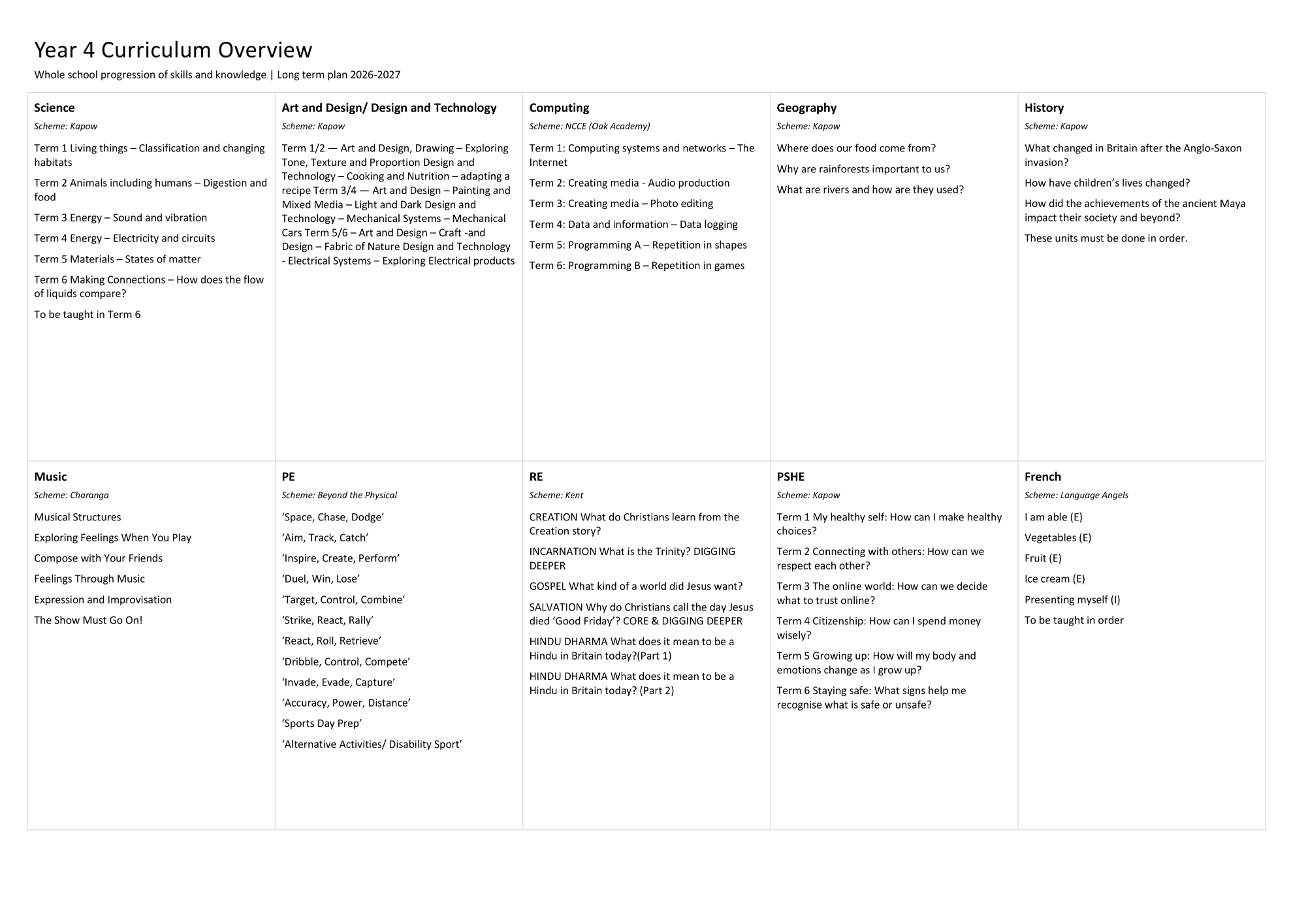
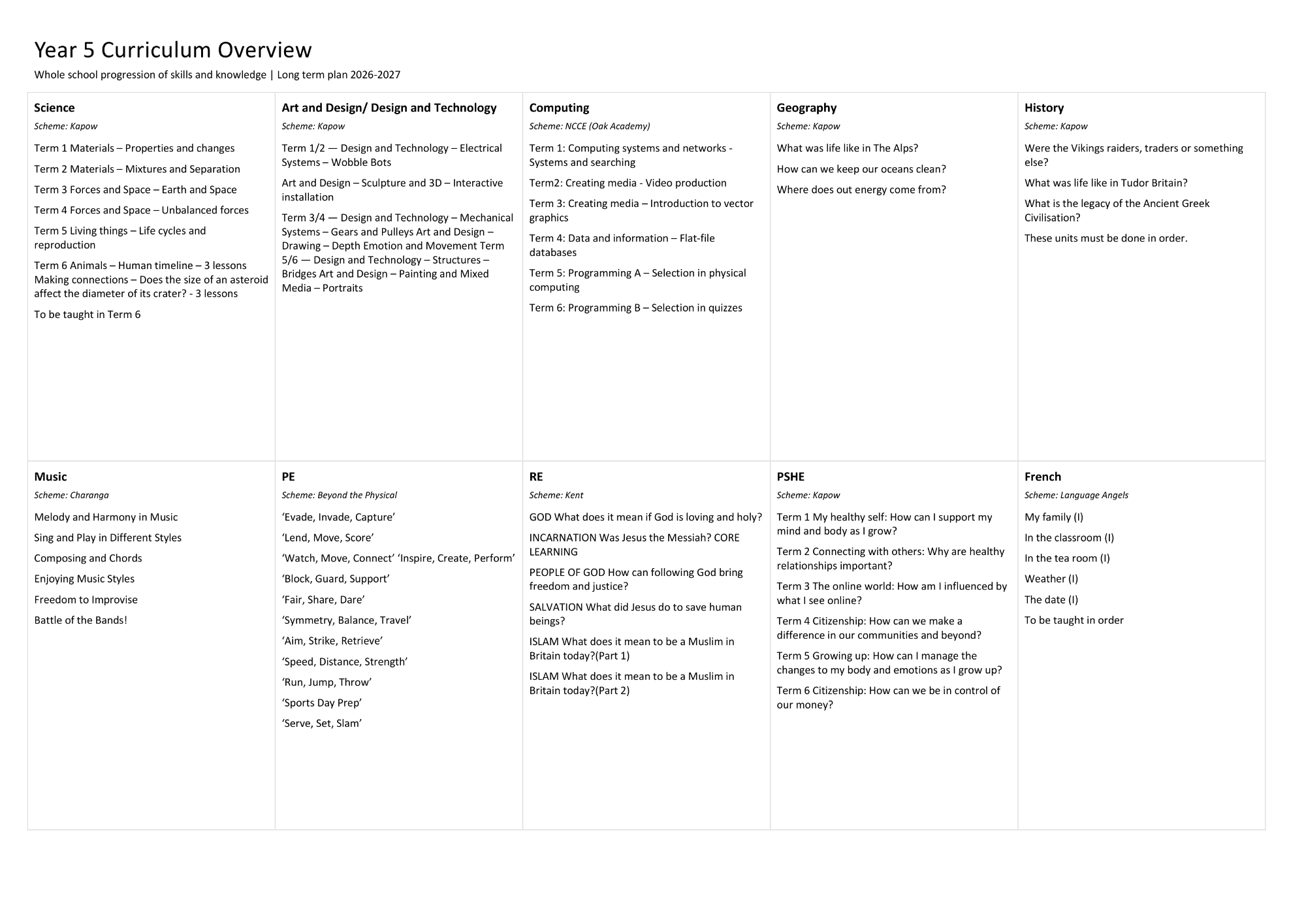
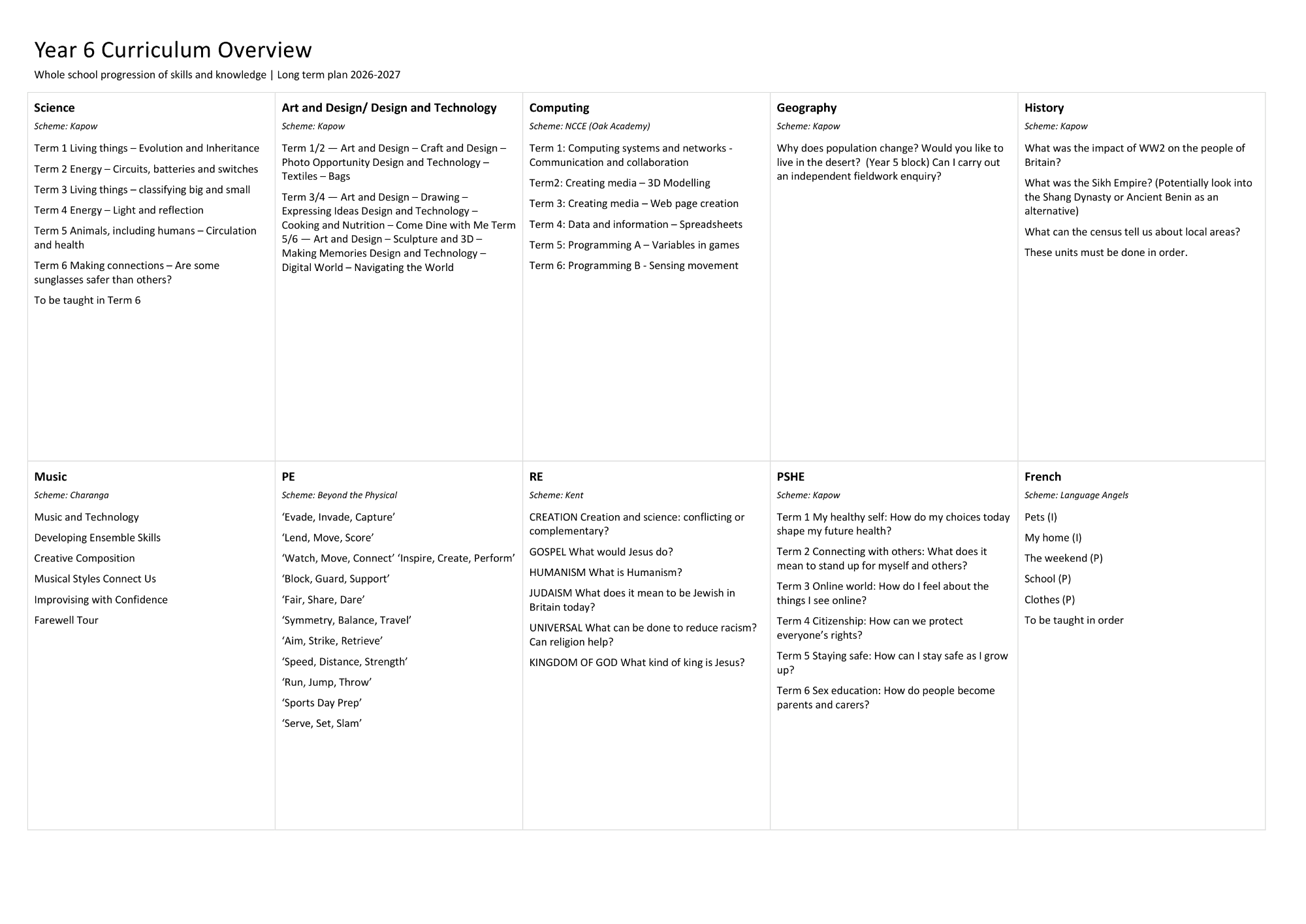
These are the schemes of work we use in each subject to ensure progression of skills, knowledge and clear learning toward end-of-year and key-stage end points.
If you would like to know more about our curriculum, please speak to a member of Senior Leadership.


Parents’ and carers’ rights of withdrawal
Parents and carers have the right to withdraw their child from all or part of Religious Education (RE). They do not need to give a reason for their decision. Anyone wishing to exercise this right should contact the Headteacher so that the school can discuss the arrangements and ensure appropriate supervision during these lessons.
Relationships Education and Health Education (RHE) are compulsory in primary schools, and parents and carers cannot withdraw their child from these subjects. This includes teaching about puberty within Health Education.
Where the school provides sex education beyond the requirements of the National Curriculum for science, parents and carers have the right to withdraw their child from all or part of this teaching. Requests should be directed to the Headteacher and will be granted. Appropriate alternative learning will be provided during the relevant lessons.
We welcome conversations with parents and carers about our curriculum and the resources used, so that families can understand what is taught and discuss any questions or concerns.